
Written By: XEONIQ [ Instagram | Tumblr ]
While searching for vintage cyberpunk media scans, I came upon a full-colour illustrated magazine cover that featured Australian expansion content for the cyberpunk pen and paper RPG: Shadowrun. The “localised” use of an oilskin duster on the cover’s protagonist in a futuristic Sydney, saturated with neon-lit pseudo-kanji and katakana signage is an entertaining Australian twist on cyberpunk’s trench coat trope. I visually enhanced the scan below removing defects and upscaling the image quality.
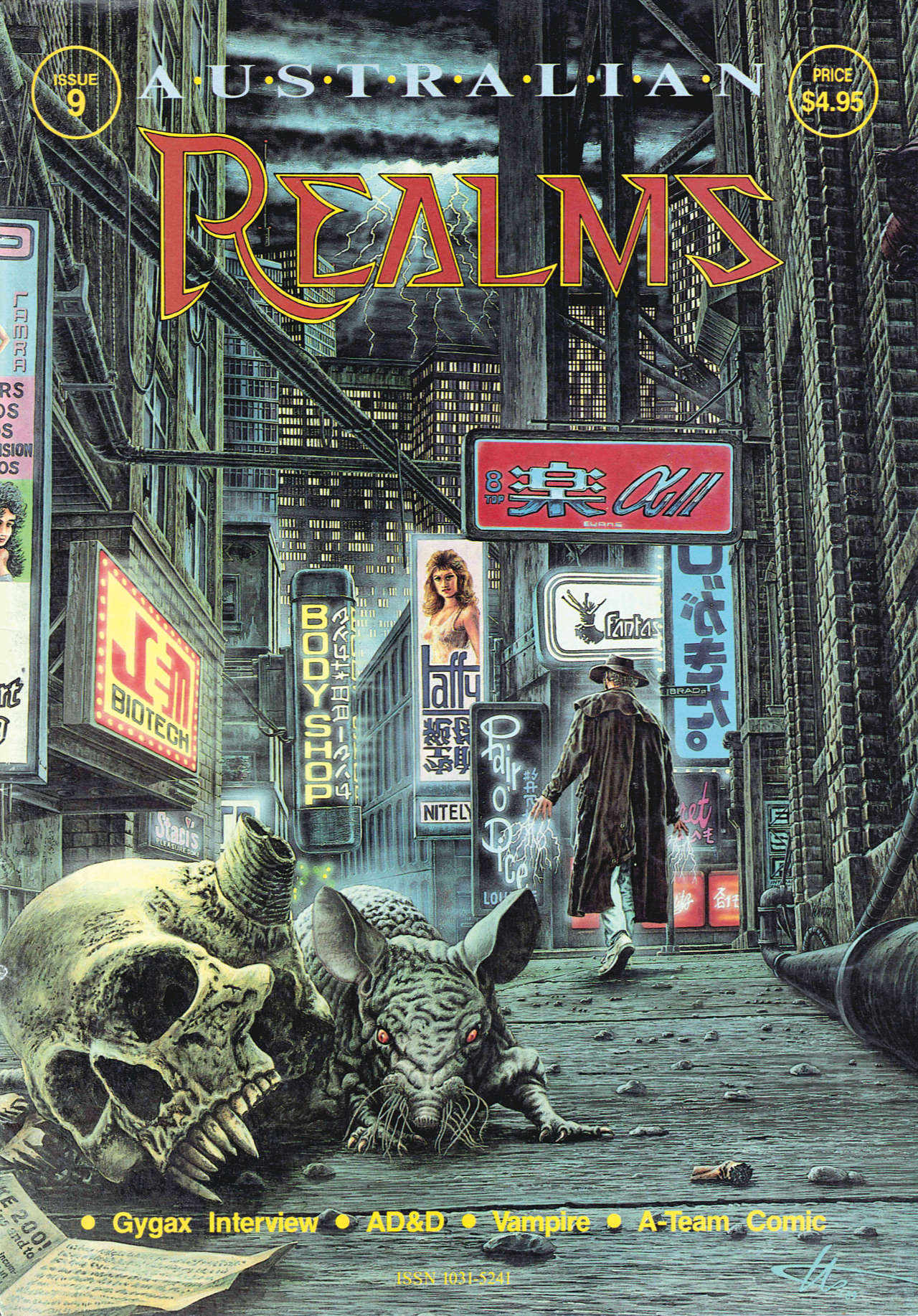
Inspired by the above magazine cover, and due to my Australian background, I wanted to explore if the oilskin duster could be practically worn for urban use in a casual context in 2026. The trench coat in particular a cyberpunk staple popularised by Ridley Scott’s Blade Runner and subsequent genre media, which you can read more about the history of in my article on the Cyberpunk Fashion Aesthetic.
My good friend Coby found an oilskin duster in a vintage clothing store, and with his friends agreed to put together a more minimal, modern styling of the coat and provide impressions on wearing it. I’ve become quite fond of long coats over the years, in particular my ROSEN-X Triton, and with my interest in cyberpunk aesthetics, I was curious as to Coby’s thoughts and experiences with wearing an oilskin duster in a similar way. With the somewhat recent shift in consumer preferences away from technical fabrics, the more organic-based oilskin material is an interesting traditional alternative that some may be interested in.
A Brief History of the Oilskin Duster
Like many Australian cultural icons, the oilskin duster actually has significant roots in New Zealand. But its history goes back much further than that. The oilskin duster coat emerged from maritime origins in the 19th-century, when linseed oil-treated linen sailcloth first became commercially popular with seafarers pioneered in Norway by Captain Helly Juell Hansen.
The technology was notably improved in 1898 by Scotland-born New Zealander Edward Le Roy, who developed a waterproof yet breathable fabric using sailcloth impregnated with linseed oil and wax. This evolved material was introduced to Australia shortly thereafter by T.E. Pearson, and becoming popular, soon spread to rural regions and the garment itself underwent significant adaptation from its marine origins to suit the demanding requirements of horse riders in the harsh conditions of the outback. While the oilskin material itself was quite heavy, its ability to repel rain and keep the wearer dry and comfortable was a major practical benefit and the coat’s excessive weight was less of a burden while on horseback.
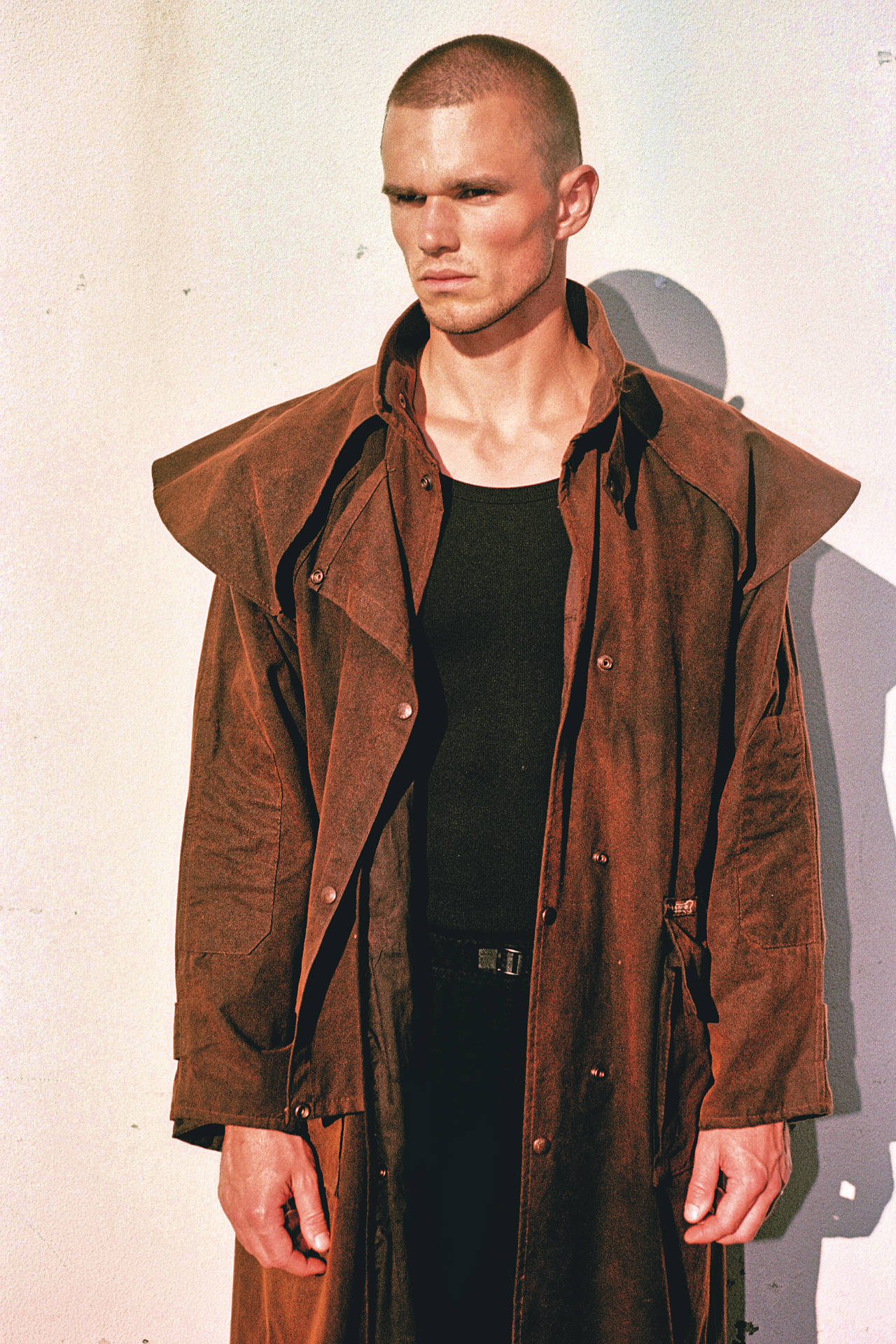
Australian stockmen further drove the evolution the oilskin duster’s practical features such as a full-length design, saddle-compatible fantail back, leg straps for mobility while horse or vehicle mounted, a re-enforced storm flap, extended sleeves with wrist cuffs, and finally double-stitched seams for durability.
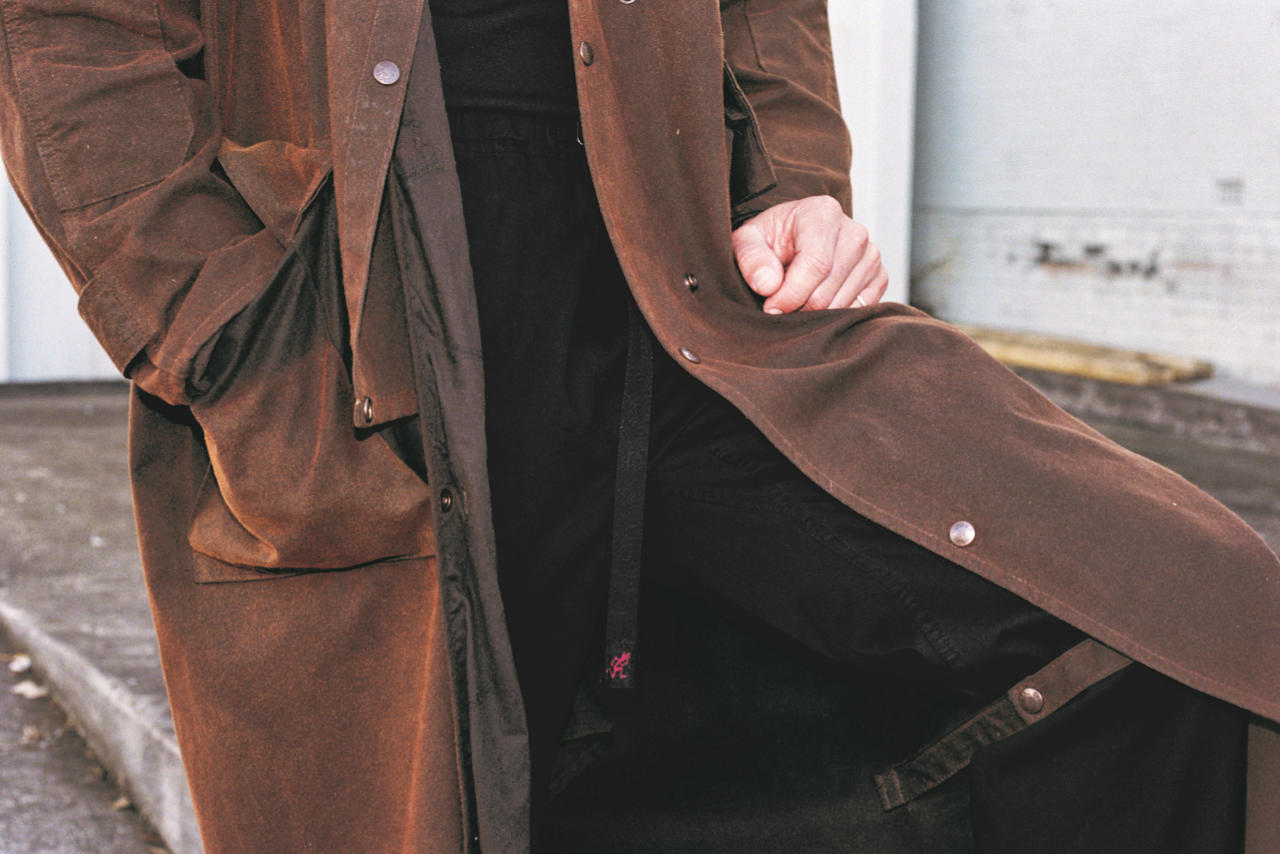
In 1933, Pearson officially trademarked this functionally-developed oilskin duster coat under the “Driza-Bone” name. Over the 20th century, the oilskin duster became cemented as an Australian icon and closely tethered to its aesthetic identity as an agricultural nation. Thus, while Norway pioneered the basic oilskin treatment and a New Zealander refined its fabric formulation, Australia perfected the oilskin duster as an overall garment into the form that is known, and still produced, today.
21st Century Urban Styling of the Oilskin Duster
The photography in this article was provided by the following team:
- Photographer: Kye Webster [ Instagram ]
- Model: Coby [ Instagram ]
- Assistant: Clae Webster [ Instagram ]
- Photo Editor: XEONIQ [ Instagram | Tumblr ]
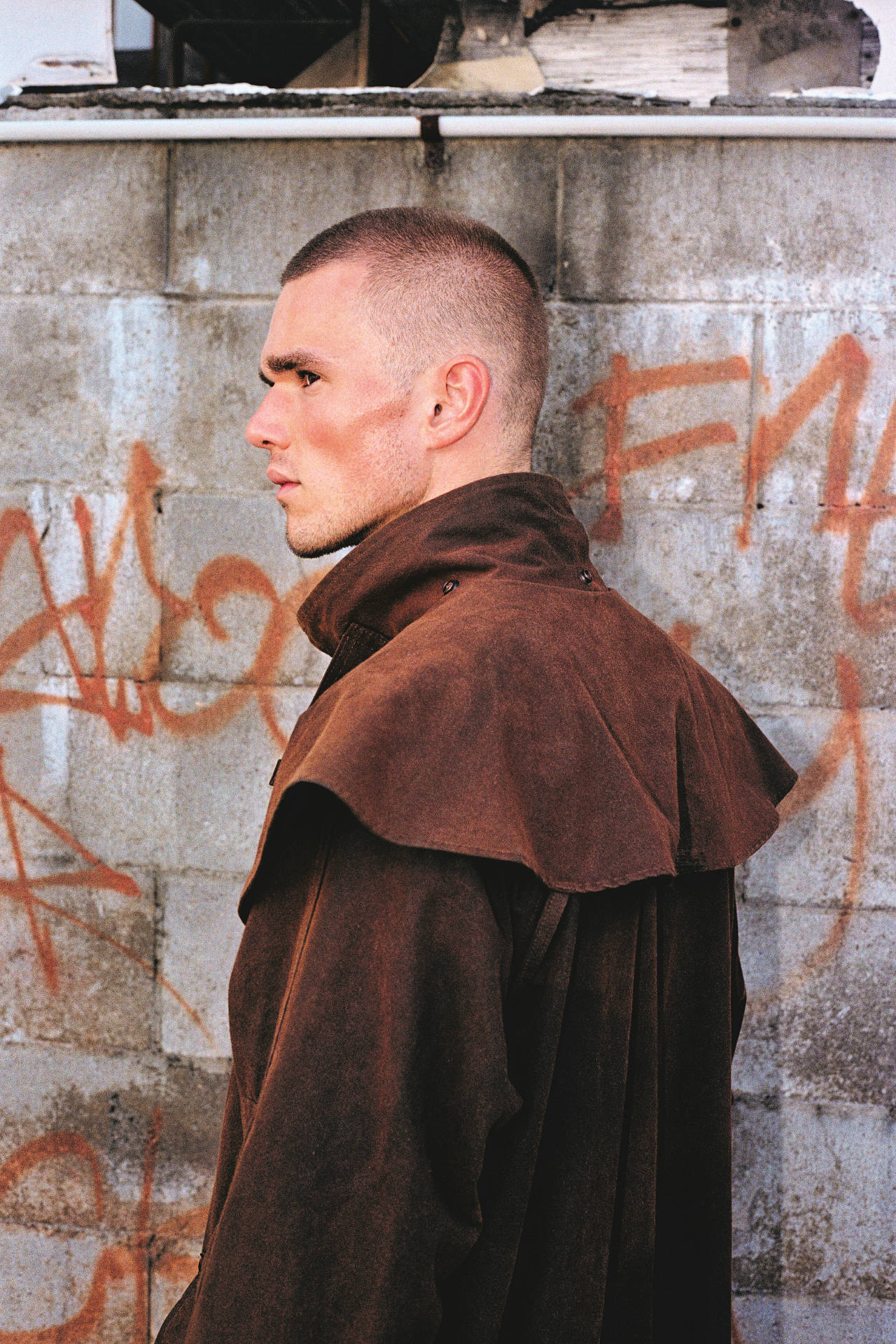
Coby’s coat is from DRIZABONE, the original commercialised Australian oilskin duster. Styled with Gramicci track pants, a pair of GORE-TEX Danner Tachyon boots and his ROSEN-X TERMINA military tank top with a pair of oval aviator sunglasses. Overall it is a more minimal way to wear the coat, reducing the outfits overall weight and modernising how it was typically worn over button flannels with heavy denim, thick leather riding boots and an Akubra hat.
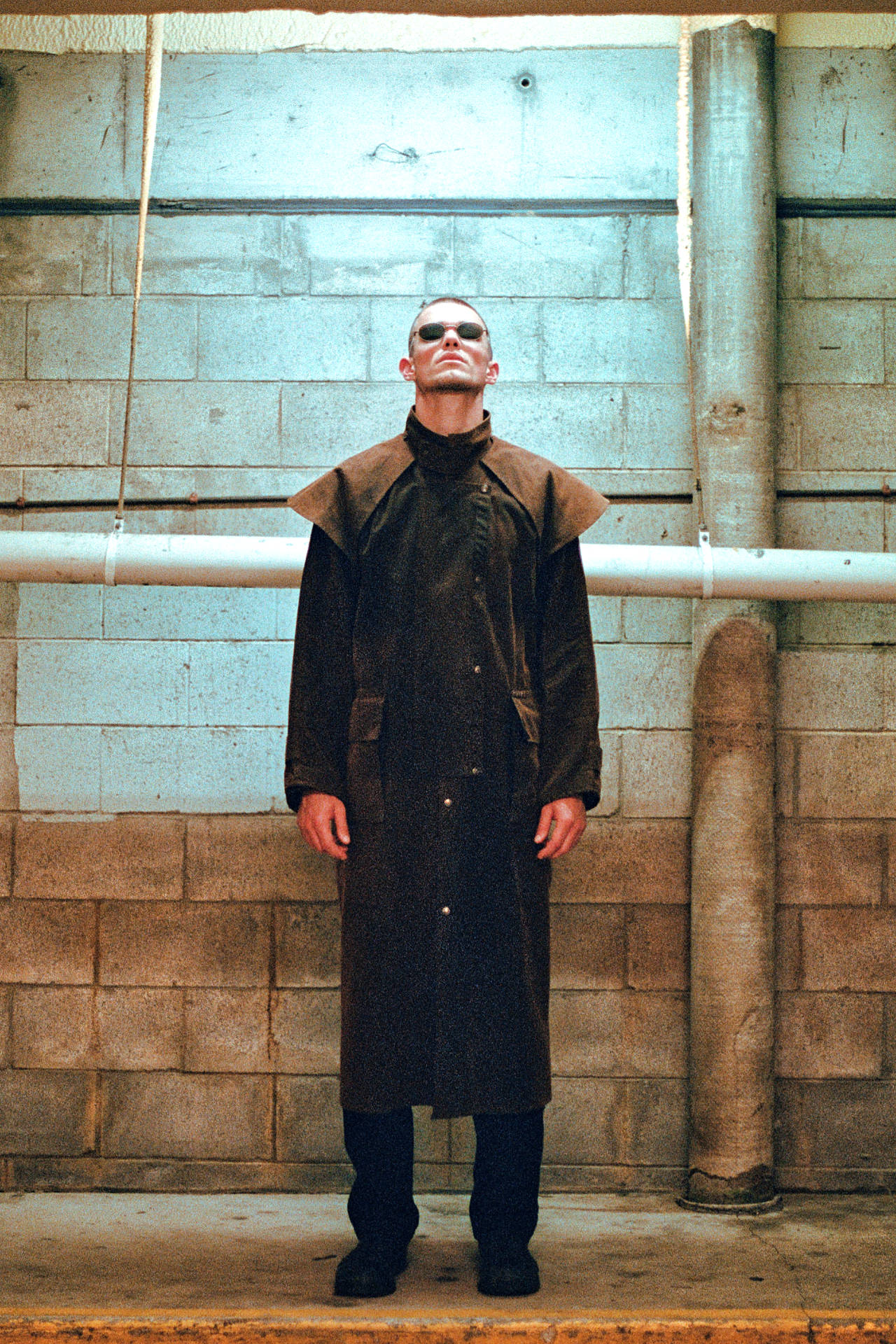
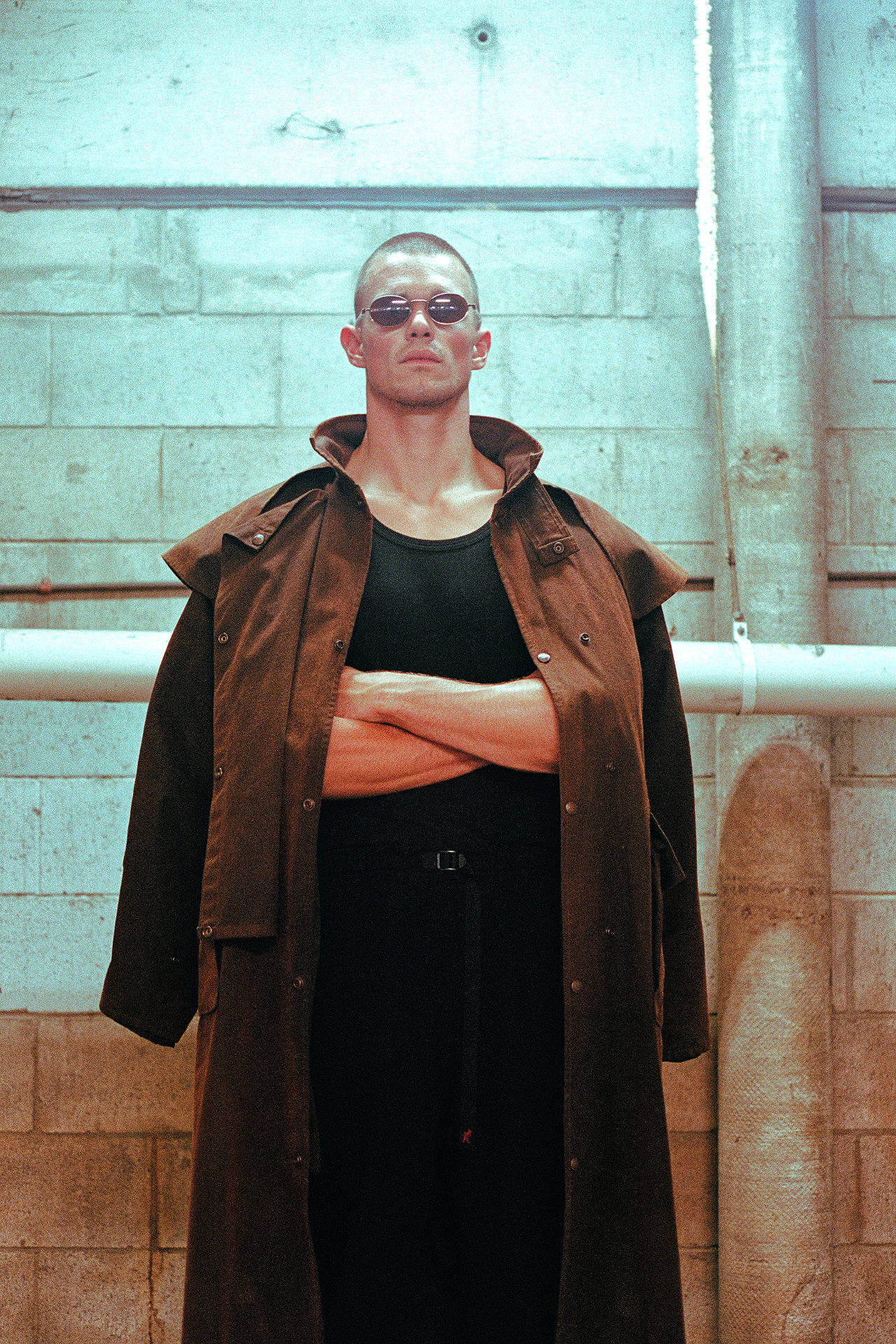
Outfit Details:
- DRIZABONE Oilskin Duster
- Unbranded Oval Aviator Sunglasses
- ROSEN-X TERMINA Military Tank
- Gramicci Cotton Track Pants
- Danner Tachyon GORE-TEX Version
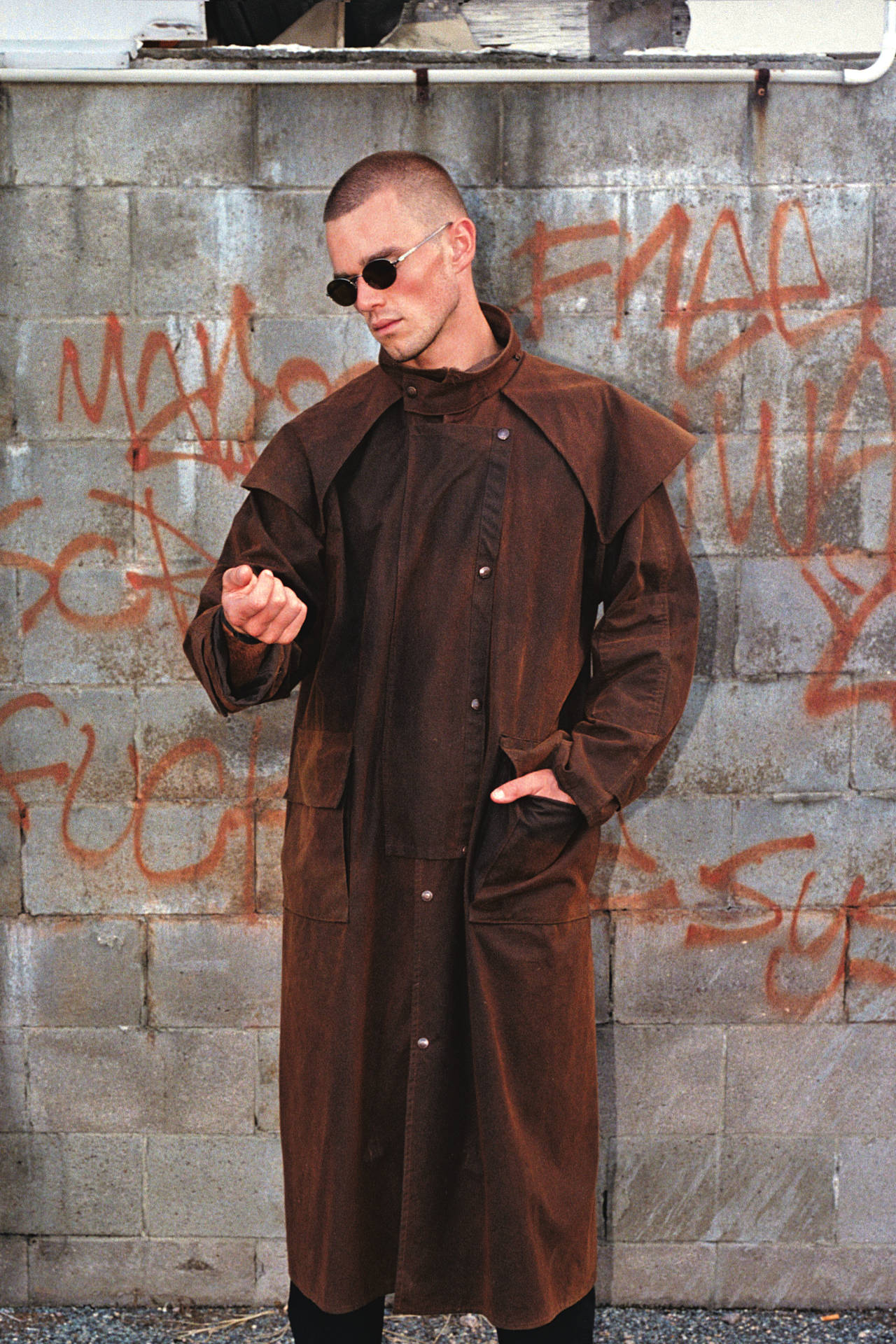
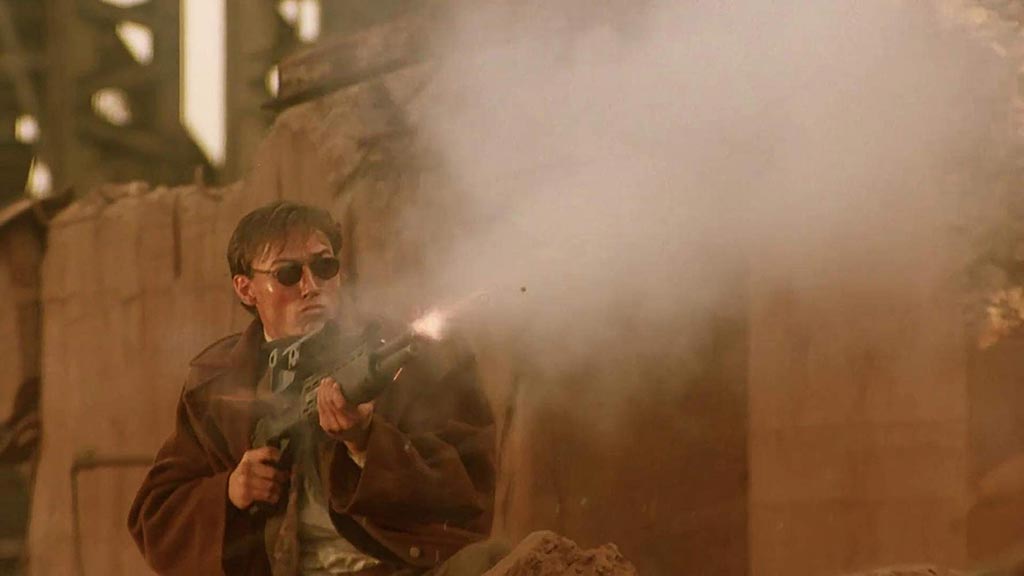
The styling Coby has developed reminds me of the cyberpunk film Nemesis (1992) [ Access cyberpunk movies list HERE ] which made similar use of oval sunglasses and a large brown double breasted trench coat.
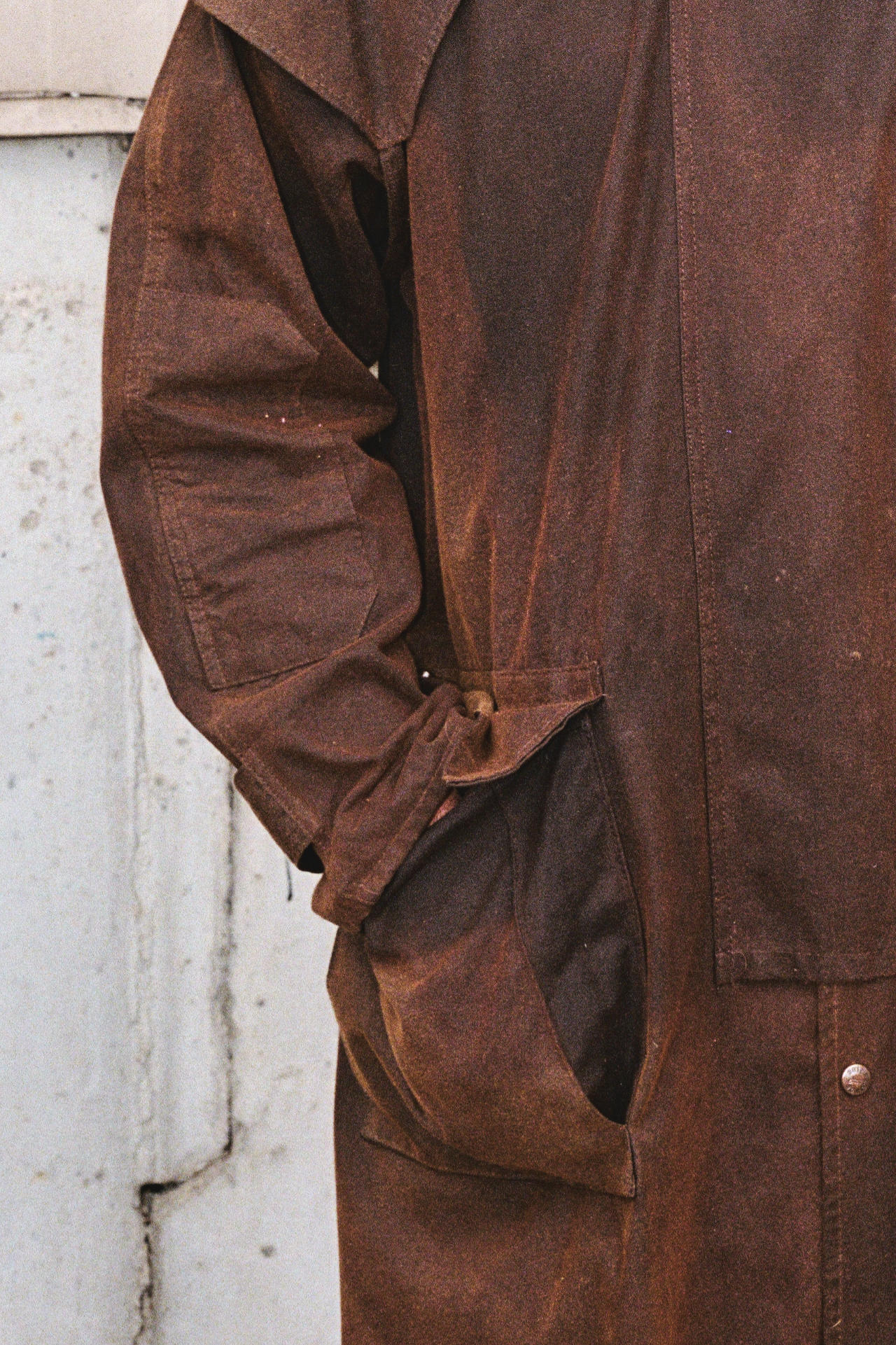
The modern DRIZABONE oilskin duster retains a number of practical workwear features that are still quite useful for a casual coat. The expanded waist pockets are gusseted and can hold a significant amount of carry versus your typical shell from an outdoors brand. The high collar can be closed with a throat latch, which has a snap for stowing when not in use.
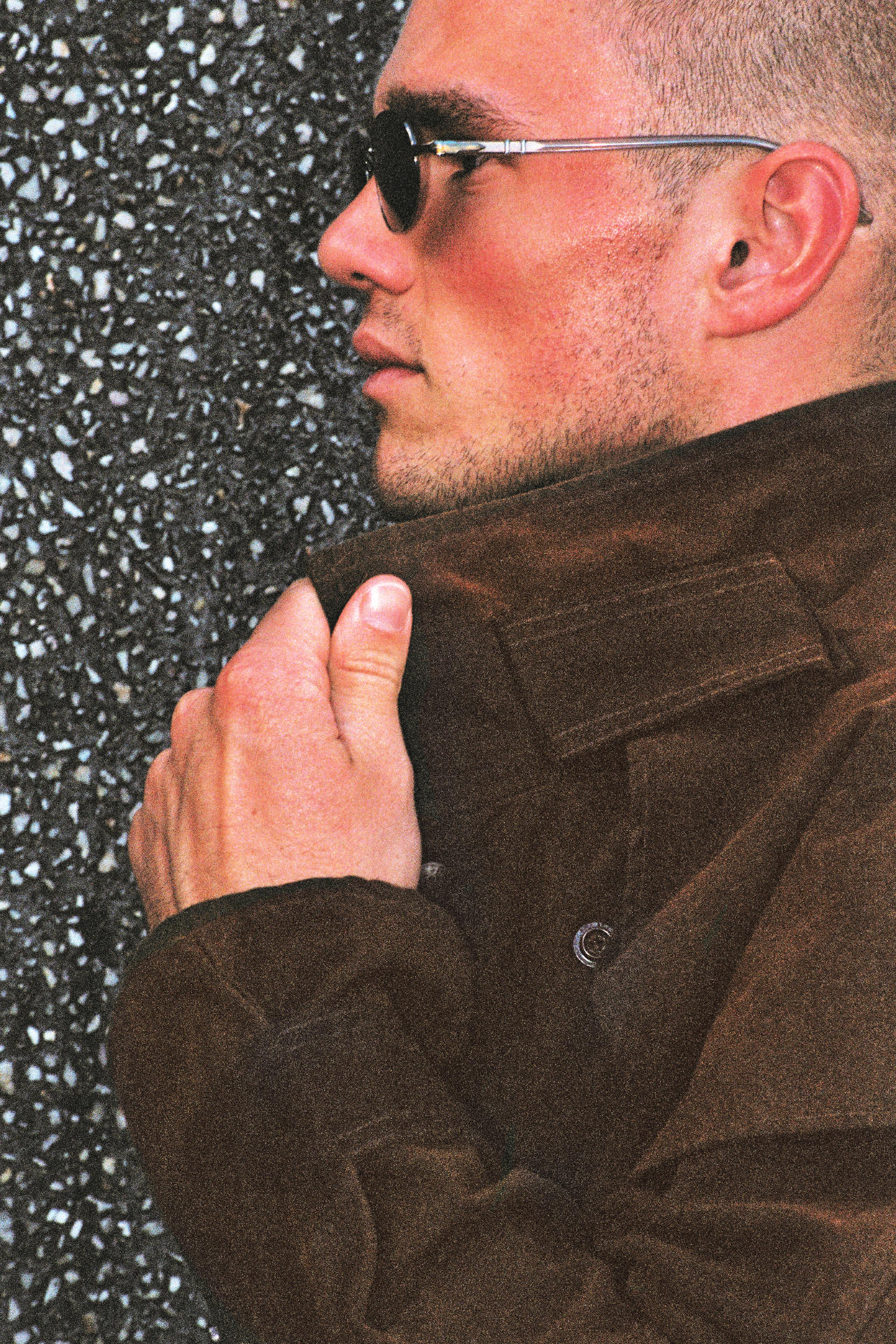
The distinctive stormflap on the DRIZABONE oilskin duster sets it apart from other long coat designs with its coverage of not only the back and shoulders but part of the upper arm as well. This extra material provides additional weather resistance as this area is where rain impacts first on a wearer.
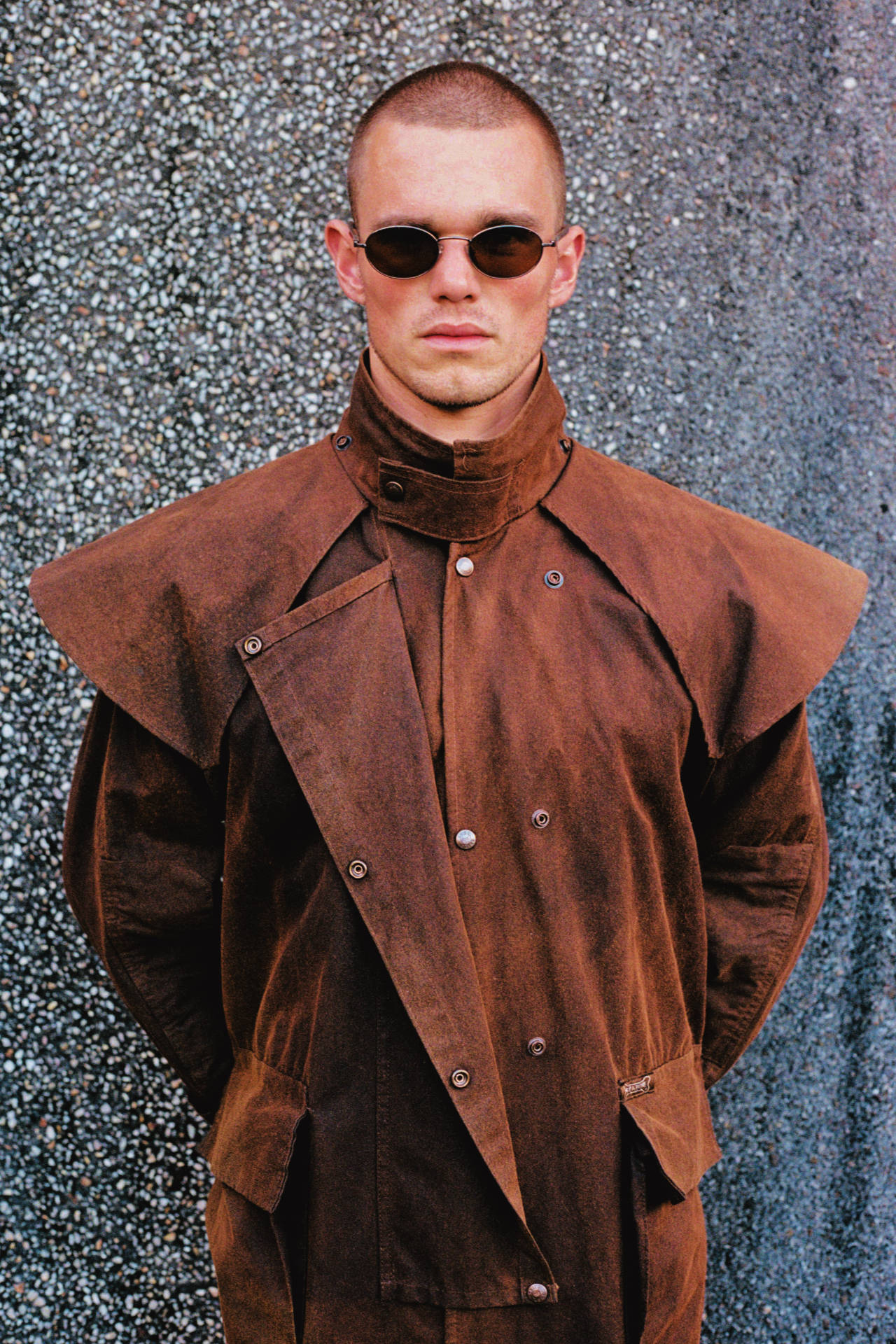
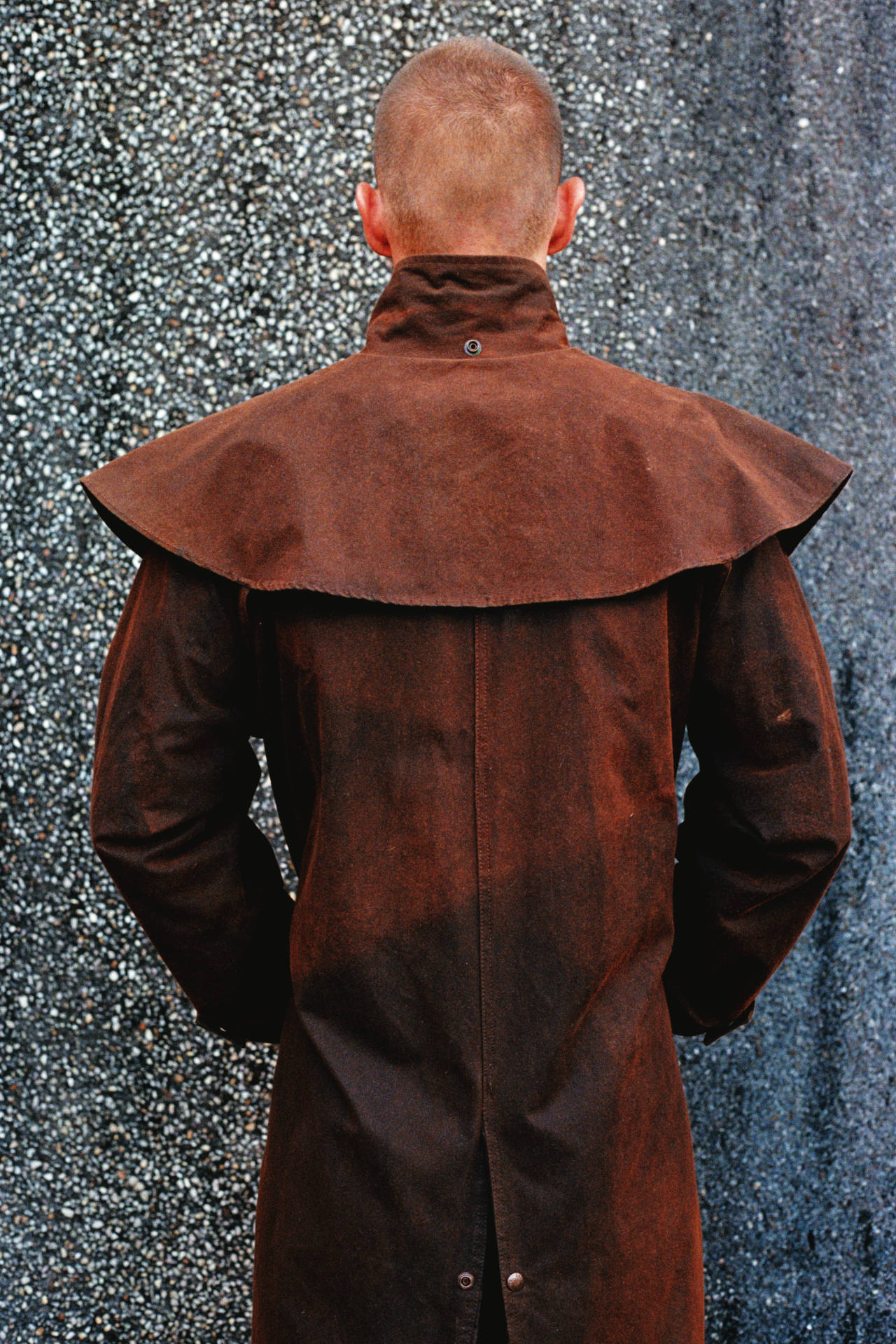
The front closure can be further secured with an additional snap panel. There is a good degree of modularity in how one can style and wear the piece thanks to these kinds of modular features where the coat can be worn open or closed in various configurations.
Issues with Wearing an Oilskin Duster Casually
While an oilskin duster is certainly waterproof, it is very heavy compared to modern outwear made from lightweight polyester and nylon synthetics. It also has very little breathability and due to its significant bulk and weight, it cannot pack well or be easily carried, which are practical benefits most urban commuters prioritise. The oilskin itself can also leave traces on anything it touches, including your hands, making it uncomfortable for indoor use, being made to be worn on a boat or on horseback in the elements outside.
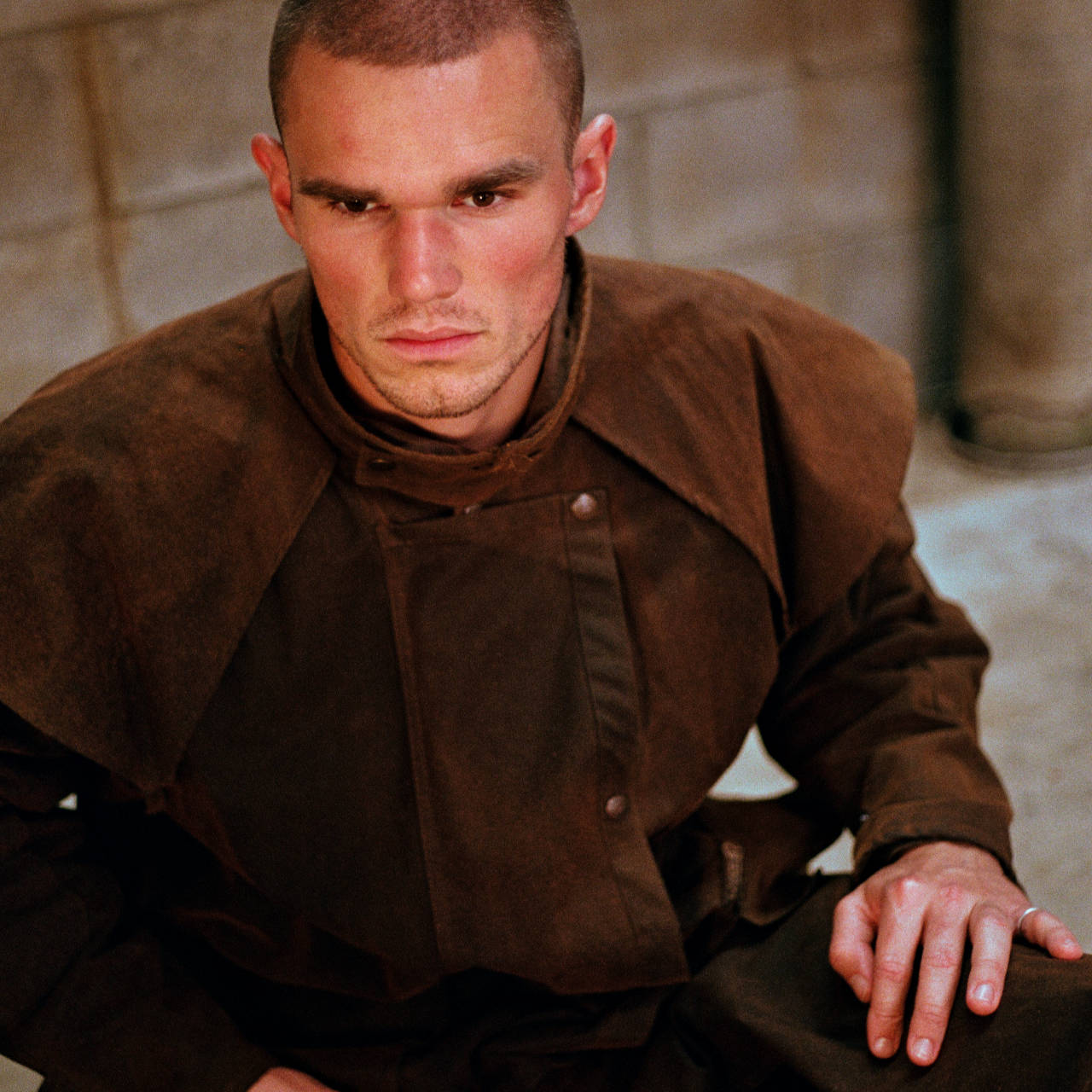
As a outdoor-only coat one would put over their clothes as they went out, for those living in cold climates and potentially for motorcycle riders, the oilskin duster can be viable for wear. As a casual piece however, there are better materials available for coat designs, from cotton, linen and wool for organics to treated and backed nylon and polyesters for synthetics.
That being said, if you live somewhere rural or where it’s cold and wet out, and want a distinctly Australian coat to hang on your porch when you venture out, an oilskin duster could still be a viable garment. For urban commuters wanting a long coat, a nylon trench coat makes more sense. Perhaps one day a modernised technical version will be developed, retaining the iconic Australian duster silhouette and storm flap but with a lighter-weight weatherproof textile.
Fair Use Statement: This article contains images hosted without express permission from their copyright holders. These images are provided for illustration purposes to support an informational objective. This should constitute fair use of any such copyrighted material.